What it says
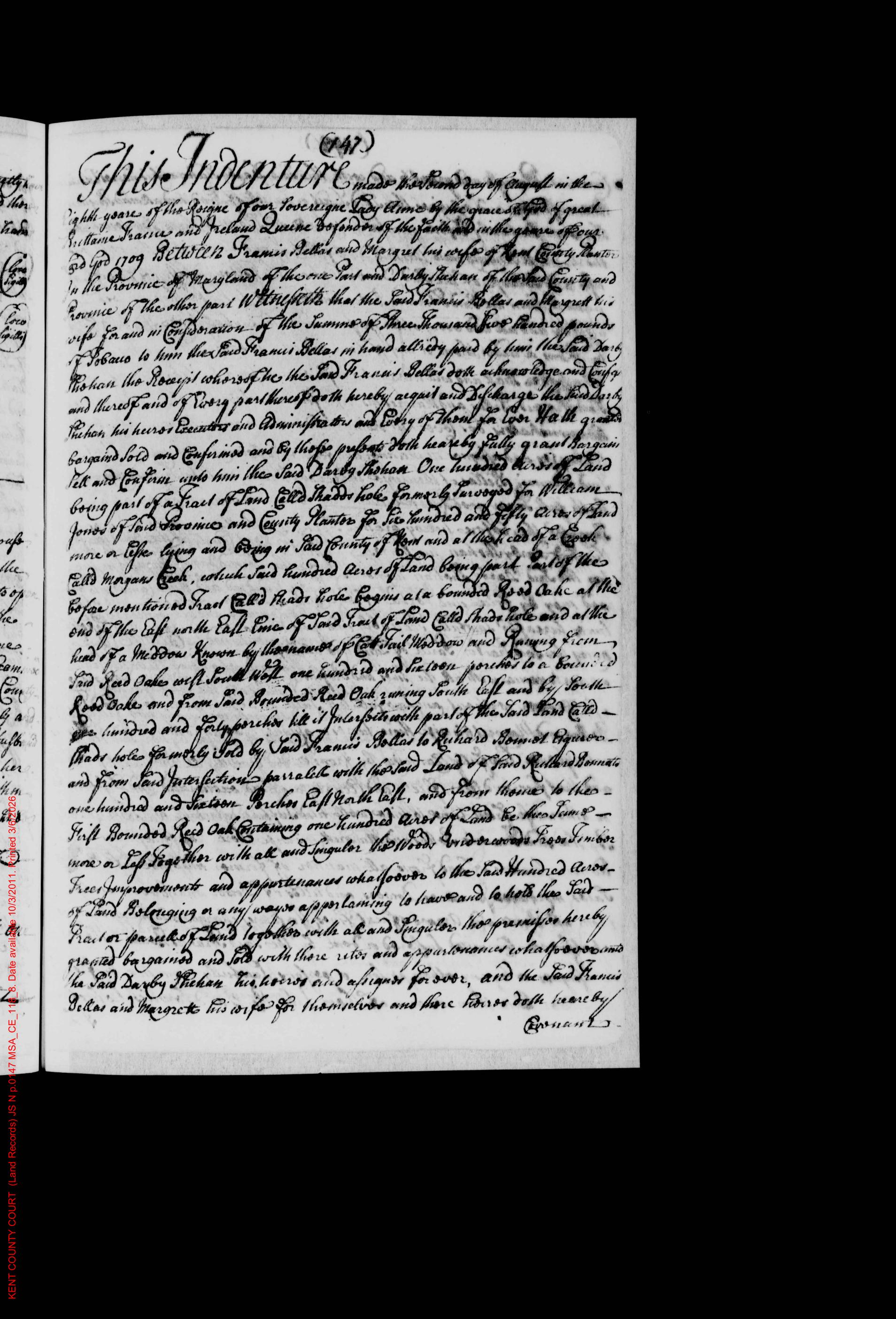
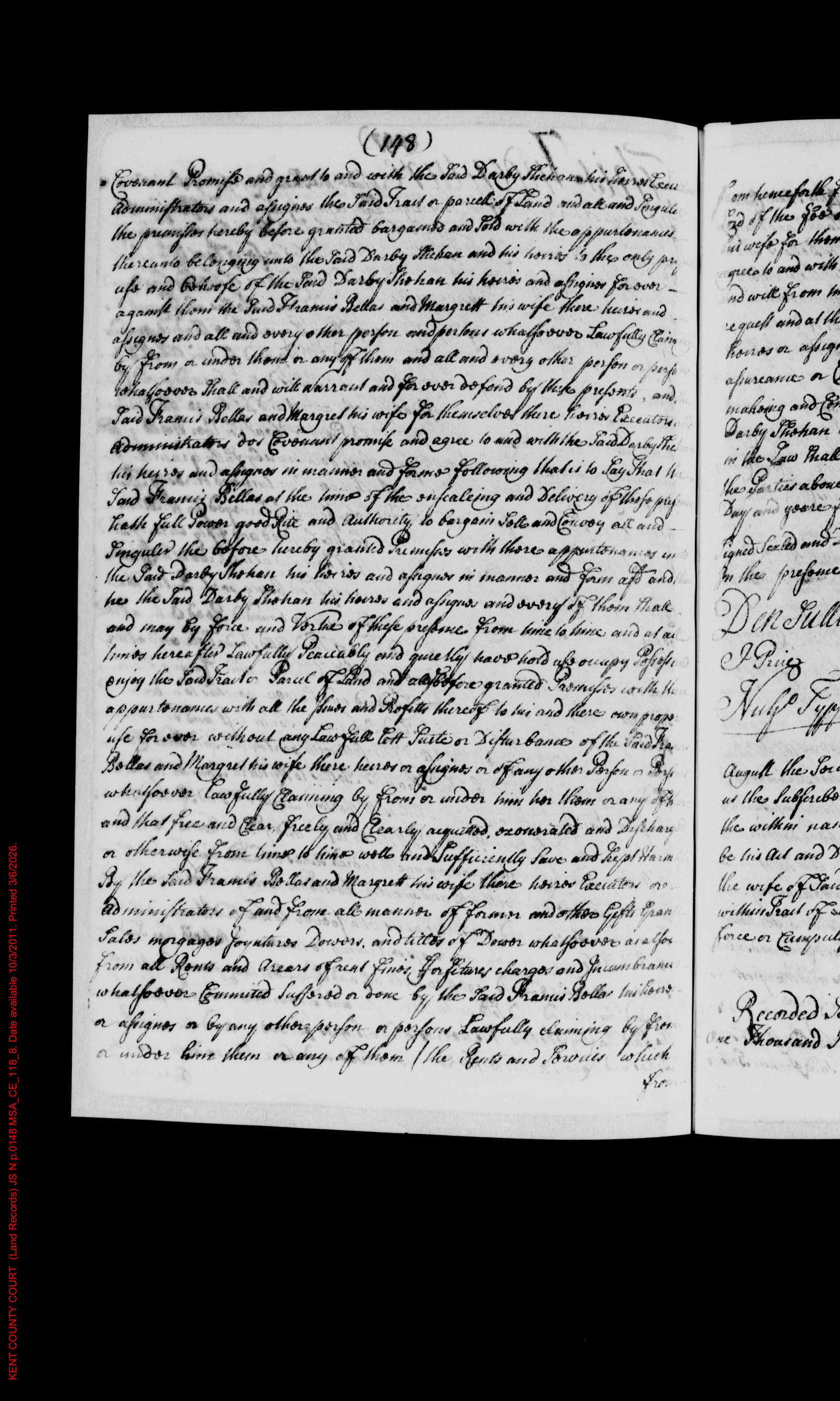
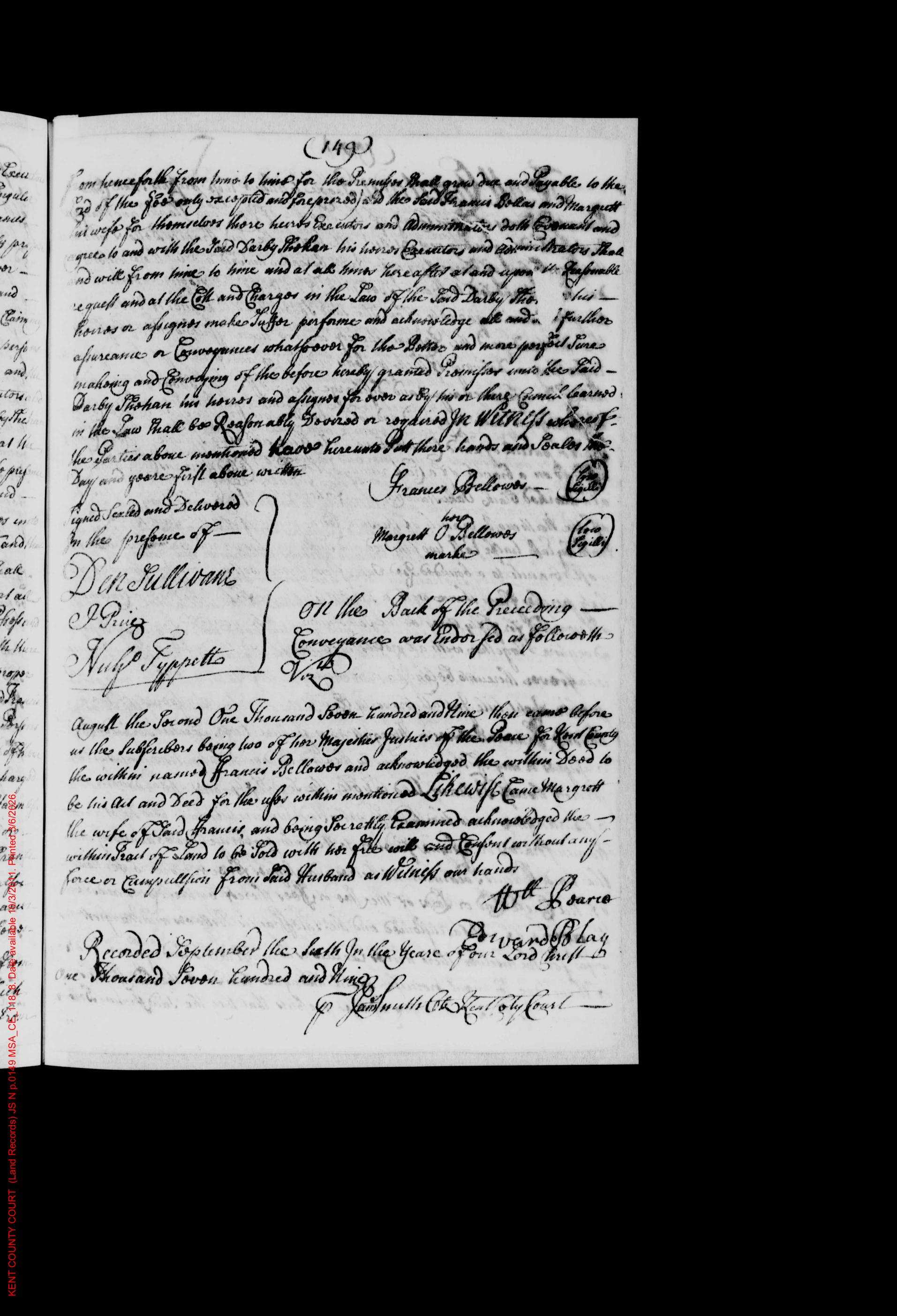
Francis Bellows and his wife Margaret sell Darby — written "Darby Shehan" — one hundred acres of a tract called Shad's Hole, at the head of a branch of Morgan's Creek in upper Kent County. Francis signs his name; Margaret signs by her mark. The witnesses were Den Sullivan, J. Prigg, and a third man surnamed Tippett.
The price was paid in tobacco, not coin. Two secondary sources give it as 3,200 pounds of tobacco. The handwriting in the deed itself is hard to read, and a second reading gives 3,500 pounds. The record supports only that range, not a settled figure.
The hundred acres were part of a larger tract first surveyed for William Jones, who willed 650 acres of it to Francis Bellows in 1681. Bellows had sold another hundred acres to a neighbor, Richard Bennett III, in 1708, so this deed describes what remained of the parent tract as about 550 acres.
Clerks spelled the place almost as many ways as they spelled Darby's name: Shad Hole, Shads Hold, Shads Hole, Shadshold, Shadshole, Shadds Hole, Shades Hole.
Why it matters
Two years after his marriage, Darby appears in the record as a landowner. Shad's Hole was the first land he and Sarah could call their own, and the place where all eight of their children were raised. Their first son, Daniel, was born the same year.
The price says something about the land. A field hand of the period could grow roughly a thousand pounds of tobacco a year, so a price of 3,200 to 3,500 pounds was modest for a hundred acres. The land was almost certainly uncleared woodland that would take years of work to turn into a farm.
The deed also shows how a man without money got land in early Maryland. The headright era was over; Darby did not claim land, he bought land that had already been patented, and he paid for it in the colony's everyday currency, tobacco.
The original